Translate

Showing posts with label Secret friend. Show all posts

Saturday, December 25, 2021

Decoding Elgar's Wrong Completion Date

Schlossskirche (Castle Church) in Wittenberg
Now the church is not wood and stone, but the company of people who believe in Christ.

The British composer Edward Elgar produced his symphonic Enigma Variations between October 1898 and July 1899. That extraordinary work elevated him from provincial obscurity to international acclaim, transforming his career from an itinerant music teacher to a celebrated composer. The original title appears on the autograph score as “Variations for orchestra composed by Edward Elgar Op. 36”. With the unconventional theme dubbed “Enigma,” the work is popularly referred to as the Enigma Variations. In the 1899 program note and other primary sources, Elgar explains the Theme is called “Enigma” because it is a counterpoint to a famous melody that is not heard but can play “through and over” the Variations. This secret tune is the cornerstone underlying the whole work, a subject that has provoked an intractable debate about the correct solution.
Some contend there is no answer by insinuating Elgar concocted the notion of an absent principal Theme as an afterthought, practical joke, or marketing gimmick. The editors of the Elgar Complete Edition of the Enigma Variations blithely deny the likelihood there could be any covert counterpoints or even cryptograms. Relying on Elgar’s recollection of playing new material at the piano to gauge his wife’s reaction, the editors tout the standard lore that he extemporized the idiosyncratic Enigma Theme, mirabile dictuwithout any forethought or planning:
There seems to have been no specific ‘enigma’ in mind at the outset: Elgar’s first playing of the music was hardly more than a running over the keys to aid relaxation. It was Alice Elgar’s interruption, apparently, that called him to attention and helped to identify the phrases which were to become the ‘Enigma’ theme. This suggests it is unlikely that the theme should conceal some counterpoint or cipher needed to solve the ‘Enigma’.
Such a blanket abnegation conveniently relieves them of any obligation to probe for ciphers or cryptograms. Proponents of such a crude denialism extol the validity of their position based on a dearth of evidence for which they never executed a diligent or impartial search. This ridiculous state of affairs is a textbook case of confirmation bias pawned off as scholarship.
The more sensible view (adopted by those who take Elgar at his published word) accepts the challenge there is a famous melody lurking behind the Variations’ contrapuntal and modal facade. Regardless of what side is taken in the debate, mainstream scholars insist the answer can never be known with absolute certainty because Elgar allegedly took his secret to the grave in February 1934. The intellectual establishment presumes he never wrote down the solution for posterity to discover. Such a staid opinion glosses over or flagrantly ignores Elgar’s documented obsession with cryptography. That incontestable facet of his psyche raises the prospect that the solution is meticulously encoded within Enigma Variations’ orchestral score.
A decade of trawling that sublime symphonic masterpiece has netted over one hundred cryptograms in diverse formats that encode a set of mutually consistent and complementary solutions. Although that figure may seem extravagant, it is entirely consistent with Elgar’s lifelong fascination with ciphers. More significantly, the solutions give definitive answers to the core questions posed by the Enigma Variations. What is the secret melody to which the Enigma Theme is a counterpoint and serves as the melodic foundation for the ensuing movements? Answer: Ein feste Burg (A Mighty Fortress) by Martin Luther. What is the “dark saying” ensconced within the Enigma Theme? Answer: A musical Polybius box cipher embedded in its inaugural six bars cordoned off by a strangely positioned double barline. Who is the secret friend and inspiration behind Variation XIII? Answer: Jesus Christ, the Savior of Elgar’s Roman Catholic faith. The cryptographic evidence supporting these discoveries is diverse yet mutually consistent, multivalent, and decisive. With such a vast trove of cryptograms, the Enigma Variations is Elgar’s musical homage to cryptography.

Elgar’s Enigma Date Cipher
On the last page of the original Finale to the Enigma Variations, Elgar penned the wrong completion date as “FEb 18 1898”. A facsimile of this final page from the autograph score is exhibited below:


Elgar’s finish date is flagrantly erroneous as he did not officially begin work on the Enigma Variations until October 21, 1898. On that historic Friday evening, Elgar first performed the Enigma Theme at the piano for his wife, Alice. The cover of the autograph score confirms it was completed on February 19, 1899.


Both end dates were Fridays with a divergence of 366 days. It is noteworthy that the first two numerals from that deviation match the opus number (36) of the Enigma Variations. Scholars concede the massive discrepancy between these two completion dates yet fail to offer any credible or cogent explanations. Why would Elgar write the wrong end date at the conclusion of Variation XIV, his own musical self-portrait? He was far too meticulous with his scores to make such an egregious error. Ultimately, the resolution to this anomaly hinges on Elgar’s lifelong obsession with cryptography.
Elgar’s anomalous completion date marks the 352nd anniversary of Martin Luther’s death on February 18, 1546. The wrong date cleverly insinuates who composed the hidden principal Theme. It also hints at where to find the answer to Elgar’s contrapuntal riddle because the complete title of Ein feste Burg is inscribed on Schlossskirche (Castle Church), Luther’s resting place in Wittenberg. The title of his most celebrated hymn does not appear on the original grave plate or bronze plaque in the sanctuary where Luther is interred. Instead, it is emblazoned around the top of the imposing church tower that was renovated between 1883 and 1892. This is a highly suitable monument as one of the English translations for Ein feste Burg has the title A Strong Tower. The renovation of Castle Church was completed six years before Elgar started work on his Enigma Variations.

Wittenberg Castle Church

Wittenberg Castle Church Tower

A coded reference to Luther’s resting place not only unveils the title of the covert Theme, for it also implicates the identity of Elgar’s secret friend whose title “Christi” (Christ) appears on the grave plate. The title of Elgar’s first sacred oratorio is Lux Christi (Light of Christ) which was premiered in 1896. The word “LUX” is encoded as a reverse acrostic anagram on the short score sketch of Variation XIII.

Martin Luther’s Grave Plate

Elgar’s incorrect completion date on the autograph score pinpoints the death anniversary of Martin Luther, the composer of the hidden melody. Luther died in his birth city of Eisleben at the age of 63. Remarkably, the number 63 is the most used metronome marking in the Enigma Variations as it sets the tempo for three different movements: The Enigma Theme, Variation I (C. A. E.), and Variation V (R. P. A.). Not only does Elgar cleverly insert the death anniversary for the covert Theme’s composer, but he also incorporates Luther’s age of death using the metronome marking 63. The opus number (36) is the reverse of that age. Luther was 36 years old when Pope Leo X issued the bull Exsurge Domine in June 1520 that threatened excommunication if he did not recant 41 propositions from his Ninety-five Theses and other papers. Luther responded with even more polemical essays and a public burning of the papal bull in December 1520.


The Roman numerals and initials from these three affiliated movements are A, A, C, E, E, I, P, R, and V. Two Es suggest a coded version of Elgar’s initials, a feature of other cryptograms ensconced within the Enigma Variations. When treated as an anagram, these nine letters may be rearranged as “PA VICAR EE.” “PA” is a shortened form of “Papa” and is informal for “Father.” A Roman Catholic priest is addressed as “Father.” Catholic canon law defines the role of a vicar as a representative of an ecclesiastical entity. For example, one of the titles for the Pope is the Vicar of Christ. These decryptions of “Father” and “Vicar” are accompanied by Elgar’s initials (EE). The relevance of these anagrams is that Martin Luther was awarded the titles “Father” and “Vicar” by the Roman Catholic Church. In 1507, he was ordained into the Roman Catholic priesthood and received the title “Father.” In 1515, Luther was appointed Vicar of Saxony and Thuringia by his religious order.
The nine letters A, A, C, E, E, I, P, R, and V may also be rearranged as the anagram “C EE PRA VIA.” “C” is a homonym of see. “EE” is Elgar’s initials. “PRA” is a phonetic form of pray. The first three words are a phonetic encryption of the phrase, “See EE pray.” “VIA” is Latin for way. Christians in the 1st century called themselves followers of “The Way.” This label was likely inspired by Jesus’ declaration in John 14:6, “I am the way . . .” In Acts 9:2, early believers are referred to as adherents of “the Way.” The phrase “See EE pray [the] Way” is distinctly Christian and is consistent with Elgar’s Roman Catholicism and its many ritual prayers.
Another possible anagram from the initials A, A, C, E, E, I, P, R, and V is “VIA PEARCE.” The way that Jesus traveled through Jerusalem to be crucified is called the Via Doloroso (The Way of Sorrows). That path is also known as the Via Crucis (Way of the Cross). There are fourteen stations of the cross, and likewise, there are fourteen numbered variations in the Enigma Variations. It is remarkable that the word “stations” rhymes with “variations.” “PEARCE” is a phonetic equivalent of pierce. A prophecy in Psalm 22:16 regarding the Messiah’s execution reads, “. . . they have pierced my hands and feet.” Jesus walked the Via Crucis to Golgotha where his hands and feet were nailed to the cross. There is ample theological justification for the anagrammatic and phonetic decryption “VIA PIERCE.”
Elgar ingeniously records Martin Luther’s death anniversary in the anomalous completion date “FEb 18 1898” on the autograph score of the original ending to the Enigma Variations. The significance of this cipher is that Luther’s tomb bears the titles of the covert Theme and Elgar’s secret friend. The title Ein feste Burg ist unser Gott prominently encircles the church tower. The title “Christi” appears on Luther’s grave plate. Luther’s resting place puts to rest the misguided myth that the solutions to Elgar’s enigmas are unsearchable mysteries.
Luther’s age of death appears in the score as the metronome marking “63” for the Enigma Theme, Variation I (C. A. E.), and Variation V (R. P. A.). The Roman numerals and initials for those three affiliated movements form the anagram “PA VICAR EE” (Father Vicar EE). Before establishing the Lutheran Church, Luther served as an ordained Roman Catholic Priest and was awarded the titles “Father” and “Vicar.” Other possible anagrams from those Roman numerals and initials are “C EE PRA VIA” (See EE pray [the] Way), and “VIA PEARCE” (Via Pierce). These phonetic anagrams intersect elegantly with Elgar’s Roman Catholic education, faith, and sacred works. To learn more about the secrets of the Enigma Variations, read my free eBook Elgar’s Enigmas ExposedPlease help support and expand my original research by becoming a sponsor on Patreon.

Soli Yah Gloria

Tuesday, July 13, 2021

Elgar's Variation XIII Titles Anagam Ciphers

Variation XIII short score sketch
In the early months of that year [1899], Elgar decided to take another house, so he moved to Craeg Lea, Wells Road, Malvern, on 21st March. It will be noticed, no doubt, that the mind which turned Jaeger into Nimrod, the daughter from Caroline Alice into Carice, and so on, once more exercised its ingenuity upon the name of his house, which is an anagram constructed from the names of all the people who lived in it, i.e., Carice, Alice, Edward, ELGAR.

The British composer Edward Elgar reveled in phonetic spellings, wordplays, and anagrams. One notable example is the title “Craeg Lae” which he gave to his Malvern home where his family resided between 1899 and 1904. That strange moniker is an anagram obtained from the reverse spelling of “Elgar” (Craeg Lea) merged with the initials from the first names of his daughter Carice, his wife Alice, and himself (Craeg Lea). Elgar challenged Rosa Burley to decipher the meaning of his home’s bemusing name. She caught on quickly as recounted in her memoir:
Edward called the place Craeg Lea and challenged me to guess how he had found the name. By some stroke of luck, I realized that the key lay in the unusual spelling of “Craeg” and immediately saw that the thing had been built up anagrammatically from (A)lice, (C)arice, (E)dward ELGAR. I think he was a little annoyed that this mystification had fallen flat.
Elgar’s enthusiasm for word games spilled over into the field of cryptography, the discipline of coding and decoding secret messages. His obsession with that esoteric art receives a full chapter in Craig P. Bauer’s treatise Unsolved! The bulk of its third chapter is devoted to Elgar’s brilliant decryption of an allegedly insoluble Nihilist cipher presented by John Holt Schooling in an April 1896 issue of The Pall Mall Magazine. Elgar was so pleased with his solution that he mentions it in his first biography published in 1905 by Robert J. Buckley. Elgar painted the solution in black paint on a wooden box, an appropriate medium as another name for the Polybius checkerboard is a box cipher.
Elgar’s methodical decryption of Schooling’s conundrum is summarized on a set of nine index cards. On the sixth card, Elgar relates the task of cracking the cipher to “. . . working (in the dark).”


His use of the word “dark” as a synonym for a cipher is apposite to this investigation because this same adjective turns up later in Elgar’s 1899 program note for the premiere of the Enigma Variations. It is an oft-cited passage that warrants revisiting as he lays the groundwork for his threefold riddle:
The Enigma I will not explain – it’s ‘dark saying’ must be left unguessed, and I warn you that the connexion between the Variations and the Theme is often of the slightest texture; further, through and over the whole set another and larger theme ‘goes’, but is not played…So the principal Theme never appears, even as in some later dramas – e.g., Maeterlinck’s ‘L’Intruse’ and ‘Les sept Princesses’ – the chief character is never on the stage.
Elgar composed the Enigma Variations in 1898-99. That extraordinary work elevated him from provincial obscurity to international acclaim, transforming his career from an itinerant music teacher to a celebrated composer. The original title appears on the autograph score as “Variations for orchestra composed by Edward Elgar Op. 36”. With the unconventional theme dubbed “Enigma,” the work is popularly referred to as the Enigma Variations. In the 1899 program note and other primary sources, Elgar explained the Theme is called “Enigma” because it is a counterpoint to a famous melody that is not heard but can play “through and over” the Variations. This absent tune is the cornerstone underlying the whole work, a subject that has provoked a prolonged debate about what could possibly be the correct melodic solution.
Some contend there is no answer by insinuating Elgar concocted the notion of an absent principal Theme as an afterthought, practical joke, or marketing ploy. Others take Elgar at his word and accept the challenge that there is a famous melody lurking behind the Variations’ contrapuntal and modal facade. Regardless of what side is taken in this debate, conventional scholarship stalwartly maintains the solution cannot be known absolutely because Elgar allegedly took his secret to the grave in February 1934. They insist Elgar never wrote down the answer for posterity to discover. Such a viewpoint glosses over or completely ignores Elgar’s documented obsession with cryptography. This incontestable fact raises the possibility that the solution is conveniently encoded within the score of the Enigma Variations.
A decade of trawling that sublime symphonic masterpiece has netted over one hundred cryptograms in diverse forms that encode a set of mutually consistent and complementary solutions. Although that figure may seem extravagant, it is entirely consistent with Elgar’s lifelong obsession for ciphers. More significantly, the solutions give definitive answers to the core questions posed by the Enigma Variations. What is the secret melody to which the Enigma Theme is a counterpoint and serves as the melodic foundation for the ensuing movements? Answer: Ein feste Burg (A Mighty Fortress) by Martin Luther. What is Elgar’s “dark saying” ensconced within the Enigma Theme? Answer: A musical Polybius box cipher embedded in its inaugural six bars cordoned off by an oddly placed double barline. Who is the secret friend and inspiration behind Variation XIII? Answer: Jesus Christ, the Savior of Elgar’s Roman Catholic faith. The cryptographic evidence supporting these discoveries is diverse, complementary, and decisive.
My research continues to unveil more ciphers in Elgar’s orchestral homage to cryptography. One revealing example of Elgar’s affinity for acrostic anagrams is found in the first bar of the Enigma Theme. In that measure, Elgar wrote seven discrete performance directions. The first letters of those musical terms are an acrostic anagram of “EE’s Psalm.” The dual Es are Elgar’s initials. “Psalm” in the singular refers to a chapter in the Book of Psalms. But which chapter? Elgar’s cryptogram has precisely 46 characters, a figure that implicates Psalm 46. That chapter is known as “Luther’s Psalm” because it inspired the hymn Ein feste Burg. In the very first bar of the Enigma Theme, Elgar enciphered the answer to his melodic riddle with an elegant acrostic anagram that he initialed in code to authenticate the unexpected answer.


Variation XIII Titles Anagram Ciphers

With so many ciphers woven into the fabric of the Enigma Variations, it would be prudent to sift the title of Variation XIII for other ciphers. A key rationale for this investigative track is that a meticulous cryptanalysis of the autograph score’s title page turned up scores of acrostic anagrams. Their decryptions affirm Ein feste Burg as the covert Theme and Jesus Christ as the secret friend depicted in Variation XIII. Below is the first page of the earliest known short score sketch of Variation XIII:

Variation XIII short score sketch

Scanning from left to right, Elgar’s original title consists of “XXX” in blue pencil followed by “Var.” in black ink and a prominent capital “L” in blue pencil. “Var.” is an abbreviation for Variation. The Gospel accounts report Jesus was brutally beaten by his captors on the night of his arrest. In a symbolic gesture, Elgar wrote the original title of Variation XIII in black and blue, the hues of a brutal bruising. The prominent letter “L” is a homonym of “El” (אל), the Hebrew word for “God.” It forms the first part of such Biblical titles as El Shaddai which translates as “God Almighty.” The initials of the three title elements in Variation XIII (“XXX Var. L”) produce a reverse acrostic of “LVX.” The letters U and V are the same in the Medieval Latin alphabet, a fact that equates “LVX” in Latin with “LUX” which means light. This decryption reflects Elgar’s education at three different Roman Catholic schools where he studied Latin and attended Latin Mass.

Variation XIII short score acrostic anagram "LVX" (LUX) cipher

Why would Elgar encode that Latin word “LUX” in the original title of Variation XIII? The answer rests in a sacred oratorio he wrote in 1896 about Jesus miraculously restoring the sight of a man born blind as documented in the Gospel of John. Elgar gave his first attempt at that genre the title Lux Christi (Light of Christ). However, the title was modified to The Light of Life at the behest of his publisher, Novello, to avoid offending Anglican sensibilities. Shortly after completing the Enigma Variations, Elgar revised Lux Christi a few months before commencing his magnum opus, The Dream of Gerontius. Recognizing Elgar’s prior use of the Latin word for light in the title of a sacred oratorio about Jesus makes the acrostic anagram “LUX” an irradiant clue regarding the identity of Elgar’s secret friend. This coded message is imbued with a discernable theological pedigree. “The light” is a title Jesus repeatedly ascribed to himself in John 8:12. In that passage, Christ called himself “the light of the world” and “the light of life.” This quotation is the source for Novello’s alternative title for Lux Christi.
Elgar replaced the Xs on the autograph score with hexegrammatic asterisks. Their distinct silhouettes are retained on the published score and replicate the Star of David.

Autograph score heading for Variation XIII


Published score title for Variation XIII

There are multifaceted connections between Jesus and King David, a talented musician and celebrated slayer of the giant Goliath. Jesus descended from David and was born in Bethlehem, the City of David. One of the more popular titles for Jesus in the Gospel accounts is “Son of David” in recognition of his royal lineage. The Gospel of Matthew records that Jesus was called “Son of David” no less than seven times (see Matthew 1:1, 9:27, 12:23, 15:22, 20:30, 21:5, and 21:9). Elgar’s hexegrammatic asterisks are a twinkling hint about the identity of his secret friend. As previously observed, the short score title for Variation XIII encodes the Latin word for light (LUX) as an acrostic anagram. No wonder Elgar later replaced the three Xs with three stars, for stars give off light.
There is other corroborating cryptographic evidence affirming Jesus as the secret friend commemorated in Variation XIII. Elgar cleverly enciphered the initials for Jesus Christ in the title of Variation XIII using an elementary number-to-letter key (1 = A, 2 = B, 3= C, etc.). “X” is the number ten, and the tenth letter of the alphabet is J. “III” represents three, and the third letter is C. The Roman numerals XIII are a coded version of the initials for Jesus Christ. For those who doubt the simplicity and efficacy of this solution, consider that Elgar deployed the same cipher key with Variation IX (Nimrod) to encode the initials for his German friend August Jaeger. The Roman numeral “I” converts to the first letter of the alphabet (A), and “X” to the tenth (J). Just in case anyone failed to recognize the identity of Nimrod, Elgar enciphered Jaeger’s initials in the Roman numerals “IX” for his noble variation.
It has been shown how Elgar enciphered the first word of Lux Christi as an acrostic anagram within the title of his earliest short score sketch of Variation XIII. Is there evidence that he also encoded the second word Christi? Elgar seasoned his correspondence with phonetic spellings. Some specimens of his inventive spellings are listed below:
  1. Bizziness (business)
  2. çkor (score)
  3. cszquōrrr (score)
  4. fagotten (forgotten)
  5. FAX (facts)
  6. frazes (phrases)
  7. gorjus (gorgeous)
  8. phatten (fatten)
  9. skorh (score)
  10. SSCZOWOUGHOHR (score)
  11. Xmas (Christmas)
  12. Xqqqq (Excuse)
  13. Xti (Christi)
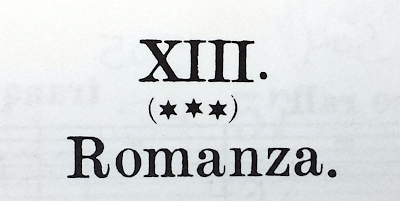
The final item on the above list (Xti) is a phonetic realization of Christi. Remarkably, two of the three letters from “Xti” appear in the Roman numerals XIII. When (***) is realized as “Three asterisks,” the absent T is conveniently given by the initial for “Three.”
  1. XIII.
  2. Three asterisks
  3. Romanza
This is one example of an adjacent title letters anagram cipher. The titles of the movements for the Enigma Variations abound with proximate title letter anagrams. For example, neighboring letters in the titles of Variations I, II, and III produce an acrostic anagram of “CHRISTI” as shown by the highlighted text below:


An early breakthrough in 2013 first revealed the meaning and significance of the three asterisks (***) in the cryptic title of Variation XIII. It was determined those absent letters are ingeniously encoded by the first initials from the titles of the adjoining movements. The first initials from Variations XII (B.G.N.) and XIV (E.D.U. and Finale) are an acrostic anagram of the initials for Ein feste Burg. Elgar deftly frames the question posed by the three asterisks with the answer hidden in plain view.


Elgar experimented with five different lists of the Enigma Variations. In retrospect, his experimentation with the order was done to construct numerous proximate title letters anagrams. Such a possibility eluded deluded scholars like Julian Rushton who irrationally speculated that Elgar lacked the time to construct any cryptograms. The historic timeline quickly disproves such a misguided notion. Elgar began openly composing the Enigma Variations in earnest on the evening of October 21, 1898. He completed the preliminary orchestration on February 19, 1899. This process consumed 121 days. Between June 30 and July 20, 1899, Elgar appended 96 bars to Variation XIV. This added an extra 21 days to the prior 121 for a grand total of 142, a period that afforded more than sufficient time and opportunity for Elgar to indulge his passion for cryptography. Why tenured scholars such as Rushton blithely dismissed the very real prospect of cryptograms in Elgar’s Variations is exceedingly enigmatic.
Did Elgar also encode the initial “C” for Christi in Variation XIII? His use of an elementary number-to-letter key draws attention to the number three because “C” is the third letter of the alphabet. Variation XIII places a subtle yet noticeable emphasis on the number three. It is a building block (III) of the Roman numerals XIII. There are three elements in the short score title consisting of 7 characters:
  1. XXX
  2. Var.
  3. L
Similarly, there are three parts in the title of the published orchestral score made up of 17 characters:
  1. XIII.
  2. (***)
  3. Romanza
The number of mysterious asterisks further highlights the number three. Variation XIII harbors three quotations from a subordinate theme in Felix Mendelssohn’s concert overture Calm Sea and Prosperous Voyage (Meeresstille und glückliche Fahrt). Set in the keys of A-flat major and E-flat major, those three melodic quotations are enclosed by conspicuous double quotation marks on the full score. There is a fourth incipit in F minor lacking quotation marks because it departs from the native major mode. In all, there are three Mendelsson quotations each consisting of three discrete notes with a total of four fragments presented in three contrasting keys. The prevalence of the number three in the Mendelssohn fragments is ineluctable and significant.


Why would Elgar subtly emphasize the number three in Variation XIII? Applying a number-to-letter key to that numeral generates the letter C, the initial for Christ. This same initial is also intimated by Elgar’s sonic portrayal of a calm sea via the Mendelssohn quotations because the word “sea” is a homonym of the letter C. The Mendelssohn fragments portray a sea crossing, an apt symbol of the cross associated with Christ’s passage from life to death. Three Mendelsson quotations symbolizing the “deathly stillness” of a calm sea may be reasonably interpreted as a theological allusion to the Sign of Jonah when Jesus analogized being entombed for three days and nights to the plight of the prophet Jonah who spent three days and nights in the belly of a great fish. The acrostic anagram “LVX” on the original short score sketch of Variation XIII hints at a cross because the word “acrostic” begins with what sounds like the phrase “a cross.” Indeed, the Enigma Variations hosts numerous allusions to the cross. For instance, the Roman numerals XIII resemble the cross and three nails as seen on the official seal of the Jesuits. Elgar dedicated the bulk of his major sacred works to God by inscribing the initials of the Jesuit motto, “Ad Majorem Dei Gloriam” (For the greater glory of God).

Jesuit Monogram

An overlapping explanation for Elgar’s emphasis on the number three in Variation XIII is his Roman Catholic embrace of the Trinity. This doctrine holds that God is one and exists as three coeternal and consubstantial persons. Cryptographic evidence for this conclusion is found in the opening bars of Variation XIII. That movement begins at Rehearsal 55 with a phonetic spelling of God with the melodic line “G-D.” Starting six bars after Rehearsal 55, Elgar states the melodic sequence “G-D” three times with the first two played in unison by the principal flute and oboe. Elgar reprises these identical melodic note patterns later in the movement at Rehearsal 58.


The Mendelssohn fragments in Variation XIII portray a ship crossing a calm sea. This sonic symbolism was inspired by the poetry of the famed German playwright Goethe whose seemingly benign image of a boat adrift on a windless sea depicts the stillness of death (Todestille). Goethe’s poetry served as the inspiration behind Mendelssohn’s concert overture by the same title that is anomalously cited four times by Elgar. Buried in the lowest staff of the score, the contrabass section performs the consecutive notes “D-E-A-D” twice. The first instance begins four bars after Rehearsal 55, and the second case starts four bars after Rehearsal 59. The subtle emphasis on the number three that permeates Variation XIII is tied to Christ’s death because Roman Catholic tradition holds he was crucified at age 33. Some contemporary biblical scholars such as Michael Rood, author of The Chronological Gospels, present compelling evidence and analysis that Jesus started his 70-week ministry as he approached age 29 and was crucified just over a year later at age 30.


The specter of death casts an ominous shadow over the Enigma Variations. In the original program note for the 1899 premiere of the Enigma Variations, Elgar likens the absent principal Theme to the mysterious protagonist who never appears on stage in dramas by the Belgian playwright, Maeterlinck. That absent character is death, a central element in Maeterlinck's works which are called “marionette” plays because the characters are mainly immobile. The silent principal Theme is evocative of a passage from Psalm 37:17 that mentions the silence of the grave. There was an indelible link between music and death in Elgar’s mind because he studied musical scores during his youth at a local churchyard while resting on a tombstone. The Mendelssohn fragments that symbolize the deathly stillness of a calm sea are tied to this undercurrent of death that permeates the Enigma Variations.
Beyond their overt symbolism, the Mendelssohn fragments also harbor beneath mere surface impressions a broad array of interrelated cryptograms. Among the simplest is the FAE Cipher. The Mendelssohn fragments are performed in the keys of A-flat major, F minor, and E-flat major. Those three key letters are an anagram of the initials for Joseph Joachim’s romantic motto, “Frei aber einsam” (Free but lonely). Joachim was a famous violinist who was mentored by Mendelssohn. “FAE” is a musical cryptogram that serves as a unifying motif in the F-A-E Violin Sonata composed in 1851 by Robert Schumann, Albert Dietrich, and Johannes Brahms. Something so obvious as the FAE cryptogram should not have escaped the notice of professional musicians and scholars. In a superb display of concealment, Elgar hid his FAE cryptogram in plain sight. Goethe intoned, “The hardest thing to see is what is in front of your eyes.” Jesus admonished his followers, “Having eyes do you not see, and having ears, do you not hear?” Although born Jewish, Mendelssohn and Joachim were baptized Lutherans. These commonalities furnish massive clues about the composer of the covert Theme as well as the ethnicity and Christian faith of Elgar’s secret friend.
Another example of a secret code nestled within the Mendelssohn fragments is the Scale Degrees Cipher that encodes the initials of Ein feste Burg. The first step to decode this cryptogram is to identify how many times a fragment is stated in a particular key. There are two incipits in A-flat major, one in F minor, and one in E-flat major. The second step is to convert each sum into the scale degree of the corresponding key. Two Mendelsson quotations in A-flat major pinpoints the second scale degree (B-flat) of that mode. One Mendelssohn fragment in F minor implicates the first scale degree (F) of that key. One Mendelssohn quotation in E-flat major identifies the first scale degree (E-flat). Strip away the accidentals from those three notes (BFE), and what remains is an anagram of “EFB,” the initials of Ein feste Burg. The solution to the absent letters represented by the three cryptic asterisks (***) is the initials of the absent Theme.


Replacing the asterisks (***) with the missing initials (EFB) in the title of the published full score yields the following three components:
  1. XIII.
  2. (EFB)
  3. Romanza
The first letters of those three title elements generate an acrostic anagram of REX, Latin for “King.” At the crucifixion of Christ, his crime was emblazoned on a placard that declared in Latin, Greek, and Hebrew, “Jesus of Nazareth, the King of the Jews.” The inscription in Latin reads as, “IESVS NAZARENVS REX IVDÆORVM.” Notice that the third word in that phrase is “REX.” In Western depictions of the crucifixion, this sign is often reduced to the initials “INRI” and displayed on a parchment or placard just above the head of Christ.

The Mond Crucifixion by Raphael

Encoded in the published title of Variation XIII is a keyword (REX) from Christ’s death warrant. It was previously observed how Elgar encoded “LUX” in the short score title of Variation XIII via an acrostic anagram. The words “LUX” and “REX” are part of Longfellow’s Cross popularized in The Golden Legend by Henry Wadsworth Longfellow.


There is credible evidence that Elgar enciphered the words of Longfellow’s cross within the concluding titles of the Enigma Variations. Elgar’s mother, Ann, nurtured a reverence for Longfellow by reading his poetry and prose to her children during childhood. She instilled in Elgar a lifelong love for that American linguist, Harvard scholar, celebrated author, and Christian poet. Elgar’s librettos for The Black Knight, Rondel, Scenes from the Saga of King Olaf, The Apostles, and The Kingdom reflect Longfellow’s enduring influence. Soon after the June 1899 premiere of the Enigma Variations, Elgar added 96 bars to Variation XIV because Hans Richter and Jaeger advised the last movement ended too abruptly. At the conclusion of this extended Finale, Elgar penned the beginning of the final stanza (XIV) from Longfellow’s poem “Elegiac Verse” from In the Harbor (1882): “Great is the art of beginning, but greater the art is of ending.” Elgar gave a copy of Longfellow’s novel Hyperion to Hans Richter in gratitude for conducting the first performance of the Enigma Variations.
Western portrayals of the crucifixion often include a titulus, a sign above Christ’s head with the acronym “INRI.” It is feasible to reconstruct the initials “INRI” from the title of Variation XIII. In the following exhibit, red lines connecting the necessary letters to spell “INRI” symbolically produce a cross:


The original short score sketch of Variation XIII has a revealing note sequence 24 bars into that movement. At that juncture, the melody line consists of E-flat followed by B played simultaneously with an F. Those three notes are the initials of Ein feste Burg. In a telling omission, Elgar dispensed with the B natural in the published score. He dare not risk making the answer too obvious by working the initials into one of the clarinet solo passages beginning with an anomalous Mendelssohn quotation. As described earlier, the initials “EFB” are also enciphered by the Letters Cluster Cipher and the Mendelssohn Fragments Scale Degrees Cipher.

Variation XIII short score "EFB" notes cipher

Four languages are associated with the construction of the acrostic anagram ciphers in the short score and published titles of Variation XIII:
  1. Latin (The Roman numerals XIII and “LVX” and “REX”)
  2. Italian (Romanza)
  3. English (“Var.” for Variation)
  4. German (“EFB” for Ein feste Burg)
The initials from those four languages generate the acrostic anagram “LIEG,” a truncated spelling of Liege. That 14th-century title may be fully realized as “LIEGE” with the addition of a second E. This extra E is suggested by Elgar’s initials (EE). The phonetic realization as “LIEG” is sufficient as he employed phonetic spellings in his correspondence. The word liege means king and lord. These synonyms are apt theological characterizations of Jesus who is called “King of kings and Lord of lords” in Revelation 19:16. This ancillary acrostic anagram was only unmasked after successfully decoding the three asterisks (EFB) and the acrostic anagrams (LUX, XTI, & REX) embedded within the titles of the short score and publish score. Only a highly skilled cryptographer could have conceived of such an intricate series of interlocking ciphers. To learn more about the secrets of the Enigma Variations, read my free eBook Elgar’s Enigmas Exposed.


Wednesday, July 7, 2021

Elgar's Title Page Enigma Ciphers

The new house was named with an anagram of the family’s initials: E, A, C. E L G A R—‘Craeg Lea’. He sent the new name to Dora Penny, teasing her with the anagram’s secret.

The British composer Edward Elgar reveled in phonetic spellings, wordplays, and anagrams. One notable example is the appellation “Craeg Lae” that he bestowed on his Malvern residence where his family resided between 1899 and 1904. This strange moniker is an anagram obtained from the reverse spelling of “Elgar” (Craeg Lea) merged with the initials from the first names of his daughter (Carice), wife (Alice), and himself (Craeg Lea). Elgar challenged Dora Penny to decipher the meaning of his home’s odd name. Dora caught on quickly as recounted in her memoir:
Edward called the place Craeg Lea and challenged me to guess how he had found the name. By some stroke of luck, I realized that the key lay in the unusual spelling of “Craeg” and immediately saw that the thing had been built up anagrammatically from (A)lice, (C)arice, (E)dward ELGAR. I think he was a little annoyed that this mystification had fallen flat.
Elgar’s enthusiasm for word games spilled over into the field of cryptography, the discipline of coding and decoding secret messages. Ciphers elevate wordplay to a higher plane of complexity that conceals words behind a smokescreen of seemingly disorganized letters or symbols. His obsession with that esoteric art merits an entire chapter in Craig P. Bauer’s treatise Unsolved! The bulk of its third chapter is devoted to Elgar’s brilliant decryption of an allegedly insoluble Nihilist cipher unfurled by John Holt Schooling in an April 1896 issue of The Pall Mall Magazine. Elgar was so pleased with his solution that he mentions it in his first biography published in 1905 by the music critic Robert J. Buckley. Elgar painted the solution in black paint on a wooden box, an appropriate medium as another name for the Polybius checkerboard is a box cipher.
Elgar’s methodical decryption of Schooling’s cipher is summarized on a set of nine index cards. On the sixth card, Elgar relates the task of cracking the cipher to “. . . working (in the dark).”


This use of the word “dark” as a synonym for a cipher is revealing as this same adjective turns up later in Elgar’s 1899 program note for the premiere of the Enigma Variations. It is an oft-cited passage that deserves repeating as he lays the groundwork for his tripartite riddle:
The Enigma I will not explain – it’s ‘dark saying’ must be left unguessed, and I warn you that the connexion between the Variations and the Theme is often of the slightest texture; further, through and over the whole set another and larger theme ‘goes’, but is not played…So the principal Theme never appears, even as in some later dramas – e.g., Maeterlinck’s ‘L’Intruse’ and ‘Les sept Princesses’ – the chief character is never on the stage.
Elgar produced his orchestral Enigma Variations in 1898-99. That extraordinary work elevated him from provincial obscurity to international acclaim, transforming his career from an itinerant music teacher to a celebrated composer. The original title appears on the autograph score as “Variations for orchestra composed by Edward Elgar Op. 36”. With the opening theme dubbed “Enigma,” the work is popularly referred to as the Enigma Variations. In the 1899 program note and other primary sources, Elgar explained the Theme is called “Enigma” because it is a counterpoint to a famous melody that is not heard but can play “through and over” the Variations. This absent tune is the cornerstone underlying the whole work, a subject that has provoked considerable debate about what could possibly be the correct melodic solution.
Some contend there is no answer by insinuating Elgar concocted the notion of an absent principal Theme as an afterthought, practical joke, or marketing ploy. These myths obdurately reverberate in the echo chamber of academia. Others take Elgar at his word and accept the challenge that there is a famous melody lurking behind the Variations’ contrapuntal and modal facade. Regardless of what side is taken in this debate, conventional scholarship stalwartly maintains the solution cannot be known with certainty because Elgar allegedly took his secret to the grave in February 1934. They insist Elgar never wrote down the answer for posterity to discover. However, this opinion overlooks his documented obsession with cryptography. This incontestable fact raises the likelihood that the solution is encoded within the Enigma Variations’ orchestral score.
A decade of trawling the Enigma Variations has netted over one hundred cryptograms in diverse forms that encode a set of mutually consistent and complementary solutions. Although that figure may seem extravagant, it is entirely consistent with Elgar’s lifelong obsession with ciphers. More significantly, their solutions give definitive answers to the core questions posed by the Enigma Variations. What is the secret melody to which the Enigma Theme is a counterpoint and serves as the melodic foundation for the ensuing movements? Answer: Ein feste Burg (A Mighty Fortress) by Martin Luther. What is Elgar’s “dark saying” ensconced within the Enigma Theme? Answer: A musical Polybius box cipher embedded in its inaugural six bars cordoned off by an oddly placed double barline. Who is the secret friend and inspiration behind Variation XIII? Answer: Jesus Christ, the Savior of Elgar’s Roman Catholic faith. The cryptographic evidence supporting these discoveries is diverse, prodigious, and decisive. Ongoing research continues to excavate new cipher discoveries in Elgar’s symphonic homage to cryptography.

The Title Page Acrostic Anagram Ciphers

With so many ciphers expertly woven into the fabric of the Enigma Variations, it is prudent to sift the title page of the autograph score for ciphers. A facsimile of the original title page is exhibited below:


Elgar penned three distinct sections on the title page:
  1. The Dedication.
  2. The Title.
  3. The Square listing the dates and place of orchestration.
The first section is the Dedication that reads, “Dedicated to my Friends pictured within.” Two of the words are capitalized, and the remaining four are lowercase. This breakdown of capitalized and lower case terms in the six-word Dedication may be combined to form 24, the sum of the letters in the six-word German title Ein feste Burg ist unser Gott. The initials from the three sequential words “. . . my Friends pictured . . .” form an acrostic glyphs anagram of “EFb,” the initials of Ein feste Burg. This decryption is feasible because the m is the glyph for a capital cursive E, and the p is the same character for the letter b. This cryptogram is deemed an acrostic anagram because only three of the Dedication’s six initials are used in its construction. In this instance, the glyphs and initial are sequential and appear in the correct order.


Interpolating the glyphs m and w as coded versions of a capital E is justified by Elgar’s pliable treatment of that character in his ingenious Dorabell Cipher. For this cryptogram dating from July 1897, Elgar invented a series of 24 curlicue characters derived from the letter c. The choice of c as the building block for this odd cast of characters was ostensibly inspired by the words cipher and cryptogram. The ciphertext begins with a capital cursive E that is reoriented to duplicate the letters M and W. Elgar did not officially begin work on the Enigma Variations until October 1898, fifteen months after formulating the Dorabella Cipher.


A second acrostic glyphs anagram of “EFb” is produced by the initials from the contiguous words “. . . Friends pictured within.” The dedication’s second line (“. . . my Friends pictured within.”) harbors two overlapping acrostic glyphs anagrams that encipher the initials for Ein feste Burg, the Variations’ covert principal Theme. 


The cover page’s second section is the Title consisting of nine terms with four beginning with capitalized letters. The Title contains at least two acrostic anagrams of “Efb.” The first is generated by the initials from its second, fifth, and sixth words, namely for, by, and Edward, respectively. The “L” pattern formed by drawing lines between those three initials conveys the initial for Luther, the composer of Ein feste Burg. “L” is also the initial for various titles for Jesus such as Life, Light, Lion, and Lord. In the Roman numeral system, “L” is the number 50.


The positions of those three title words are conspicuous because the alphabet’s second, fifth, and sixth letters furnish the initials for Ein feste Burg. This form of encipherment is known as a number-to-letter key in which a numeral is converted into its corresponding letter of the alphabet (1 = A, 2 = B, 3 = C, etc.). According to this formula, the number two converts to the second letter B, the number five to the fifth letter E, and the number six to the sixth letter F. Remarkably, Elgar deployed two contrasting modes of encipherment with the title words “for,” “by” and “Edward” to encode the initials “EFB.” The first is an acrostic anagram cipher, and the second is a title word position cipher. These overlapping ciphers encode the same solution using two contrasting techniques that serve as two-factor authentication.
A second “Efb” is encoded by the title words for, by, and Elgar as an acrostic anagram. The initials appear in lines 4, 5, and 6 of the title page with the dedication consisting of lines 1 and 2. The first and last lines of the Title Section “EFb” ciphers are 4 and 6, respectively. The numerals 4 and 6 may be combined to form 46, the chapter from the Psalms that inspired Luther to compose Ein feste Burg. Similar to the two “EFb” anagrams in the second line of the dedication, the two “EFB” acrostic anagrams in the title share two common words, i.e., “by” and “for.” The similar construction of the dedication and title “EFB” ciphers presents a subtle yet discernible symmetry that affirms a deliberate design. The “V” configuration of the second “EFB” acrostic anagram in the Title suggests the initial for Variations. In the Roman numeral system, the letter “V” is the number five. 


There is another acrostic anagram in the Variations’ title that spells “VocE,” the Italian performance direction for voice. This acrostic anagram is traced to the initials from Variations, orchestra, composed, and Elgar. Connecting these initials with straight lines yields two “L” formations. The first “L” faces backward and is tilted about 45 degrees. The second overlapping “L” is flipped upside down at a 45-degree angle. In all, there are three capital “L” formations tied to acrostic anagrams in the Title that spell “EFb” and “VocE.” These similarly shaped acrostic formations link the two anagrams, proclaiming that Ein feste Burg is the absent “voice” of the Variations.


The “VocE” anagram is created by the initials from the first, third, fourth, and seventh words from the title. Converting those positions into their corresponding letters of the alphabet generates the plaintext A, C, D, and G. The first and third letters (AD) are the Medieval Latin initials for Anno Domini. This comes from the original phrase “anno Domini nostri Jesu Christi” which translates as “in the year of our Lord Jesus Christ.” The Savior of Elgar’s Roman Catholicism is the secret friend memorialized in Variation XIII. Jesus Christ is named in the second stanza of A Mighty Fortress. Not only is the letter C the initial for Christ, it is also a homonym for see and sea. Elgar cites a melodic incipit from Mendelssohn’s overture Calm Sea and Prosperous Voyage in Variation XIII. The last two letters (G-D) are a phonetic spelling of God. In a revealing gesture, the first two melody notes of Variation XIII are “G-D.”


The double bass section performs the notes “D-E-A-D” starting four bars after Rehearsal 55. This discovery is consistent with the Mendelssohn quotations that symbolize the “deathly stillness” of a calm sea. The spelling of the word “dead” by the lowest voice of the string choir is immediately followed by three melodic statements in the woodwinds of “G-D,” a phonetic spelling of “God.” Three statements of “G-D” aptly symbolize the Roman Catholic belief in the Trinity. These same note sequences are reprised later in the movement. The coding of “DEAD” followed by three statements of “G-D” intimates the person of the Trinity who died. A central tenant of Christianity is the belief that Jesus — the human manifestation of God — suffered a gruesome death on the cross and was miraculously resurrected from the tomb. Elgar's “Dead God” Notes Cipher implicates Jesus as the secret friend memorialized in Variation XIII.
Proceeding to the third section of the title page, the Square houses no less than six “EFB” anagrams. The first and most obvious are the “FEb” abbreviations of the month February for the start and end dates of the orchestration.


The letters “FEb” are a transparent anagram of “EFb.” The second letter in these “FEb” abbreviations is conspicuously capitalized when the rules of grammar require that it be lowercase. Those same rules demand that the first letter of a title be capitalized, and that is the case with Ein feste Burg. Those two incorrectly capitalized Es in “FEb” are a coded form of Elgar’s initials (EE). To the right of the orchestration’s start and end dates are two capital Ls camouflaged as square brackets. The letter L is the initial for Luther and various titles for Jesus. The presence of two overlapping Ls may represent “Luther’s Lord” or “Longfellow's Luther.
There are five initials from terms within the Square that furnish the letters and glyphs needed to construct six acrostic anagrams of “EFb.” These letters and glyphs are provided by the initials for FEb 5thended, Feb 19th (with the anomalous F nearly duplicating a backward B), Forli, and Malvern (with the M approximating a capital cursive E as observed in the Dorabella Cipher).


The outlines of the acrostic anagrams “EFb” and “VocE” in the Title section generate “L” and “V” formations. In addition to being the initial for Luther, “L” is also the initial for various titles for Jesus mentioned earlier. “L” is also a homonym for El, the Hebrew word for God. Elgar’s first sacred oratorio about Jesus healing a man blind from birth is called Lux Christi (Light of Christ). On the original short score of Variation XIII, Elgar gave this movement the title “XXX Var. L.” The “XXX” and “L” are in blue pencil, and “Var.” is in black ink. The short score of Variation XIII is mentioned due to the prominence of the initial L which is emblematic of the L-formations of some acrostic anagrams on the title page.


In my next forthcoming essay, I will describe and decrypt a significant acrostic anagram cipher in the title of Variation XIII that only recently came to my attention. Incidentally, the word “acrostic” is suggestive of the phrase “a cross” due to its spelling and pronunciation (acrostic). For this reason, the prominence of acrostic anagrams on the title page further hint at the identity of Elgar’s secret friend.
Some acrostic anagrams on the title page are presented in “L” and “V” configurations. When treated as Roman numerals, the letters “LV” represent the number 55. That figure may be interpreted as a coded reference to Elgar’s initials (EE) as E is the fifth letter of the alphabet. Rehearsal 55 marks the beginning of Variation XIII, a movement dedicated in secret to Jesus Christ. The letters “LV” may also be read phonetically as love and live.


There are four “EFB” anagrams in the dedication and title sections, and six more within the suare for a total of ten. This distribution of the “EFB” anagrams alludes to the numbers four and six. These same numbers are also emphasized by four acrostic anagram EFB ciphers and six acrostic anagram glyph EFB ciphers. These same numbers are emphasized by the Enigma Theme with four melody notes per measure in Section A (bars 1-6) and A’ (bars 11-16), and six melody notes per measure in Section B (bars 7-10). The coded references to the numbers 4 and 6 allude to 46, the chapter from the Psalms that inspired Luther’s Ein feste Burg. Psalm 46 is known as “Luther’s Psalm.” Seven discrete performance directions in the opening measure of the Enigma Theme are an acrostic anagram of “EE’s Psalm.” In a remarkable parallel, there are exactly 46 characters in that particular cryptogram that implicate Psalm 46.


A survey of acrostic anagram ciphers incorporated on the title page of the Variations’ autograph score uncovered ten encryptions of “EFB” and one of “Voce.” Consistent with Elgar’s affinity for anagrams and ciphers, these decryptions implicate Luther’s Ein feste Burg as the absent voice of the Enigma Variations. Some of these anagrams are laid out in “L” and “V” patterns. The letter L is the initial for Luther and assorted titles for Jesus such as Life, Light, Lion, Lord, and Lux. L is also a homonym of the Hebrew word El meaning God. The letter V is the initial for Variations. The Roman numerals LV for the number 55 communicates a coded form of Elgar’s initials as E is the fifth letter of the alphabet. These anagrams bear Elgar’s initials and complete signature, providing a second tier of encryption that complements the solutions unveiled by the first tier. To learn more about the secrets of the Enigma Variations, read my free eBook Elgar’s Enigmas Exposed. Please help support and expand my original research by becoming a sponsor on Patreon.

Soli Yah Gloria

About Mr. Padgett

My photo
Mr. Padgett studied violin with Michael Rosenker (a student of Leopold Auer), and Rosenker’s pupil, Owen Dunsford. Mr. Padgett studied piano with Sally Magee (a student of Emanuel Bay), and Blanca Uribe (a student of Rosina Lhévinne). He attended the Stevenson School in Pebble Beach, California, and Vassar College in Poughkeepsie, New York, where he graduated Phi Beta Kappa with a degree in psychology. At Vassar he studied music theory and composition with Richard Wilson. Mr. Padgett has performed for Joseph Silverstein, Van Cliburn, Arnold Schwarzenegger, Maria Shriver, Steve Jobs, Prince Charles, Lady Camilla, Marcia Davenport, William F. Buckley, Jr., and other prominent public figures. His original compositions have been performed by the Monterey Symphony, at the Bohemian Grove, the Bohemian Club, and other private and public venues. In 2008 Mr. Padgett won the Max Bragado-Darman Fanfare Competition with his entry "Fanfare for the Eagles." It was premiered by the Monterey Symphony under Maestro Bragado in May 2008. A member of the Elgar Society, Mr. Padgett is married with five children.