Translate

Showing posts with label Torquato Tasso. Show all posts

Friday, March 27, 2020

Elgar’s ‘Craeg Lea’ Enigma Cipher

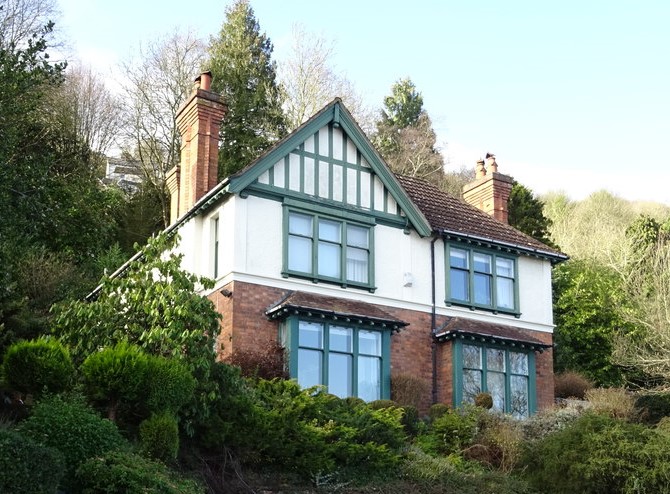
The new house was named with an anagram of the family’s initials: E, A, C. E L G A R — Craeg Lea’. He sent the new name to Dora Penny, teasing her with the anagram’s secret.
Jerrold Northrop Moore in Edward Elgar: Letters of a Lifetime

There is no doubt Edward Elgar was an expert in cryptography, the discipline of coding and decoding messages. His obsession with that esoteric art merits an entire chapter in Craig P. Bauer’s treatise Unsolved! Much of the third chapter is devoted to Elgar’s brilliant decryption of an allegedly insoluble Nihilist cipher presented by John Holt Schooling in an April 1896 issue of The Pall Mall Magazine. Elgar was so pleased with his solution that he mentions it in his first biography published in 1905 by Robert J. Buckley. Elgar painted his solution in black paint on a wooden box, an appropriate medium as another name for the Polybius checkerboard is a box cipher.
Elgar’s methodical decryption is summarized on a set of nine index cards. On the sixth card, he relates the task of cracking the cipher to “. . . working (in the dark).”


This use of the word dark as a synonym for cipher is significant because he employs that same phraseology in the 1899 program note for the premiere to characterize the Enigma Theme. It is an oft-cited passage that merits revisiting because Elgar lays the groundwork for his tripartite riddle:
The Enigma I will not explain – its ‘dark saying’ must be left unguessed, and I warn you that the connexion between the Variations and the Theme is often of the slightest texture; further, through and over the whole set another and larger theme ‘goes’, but is not played . . . So the principal Theme never appears, even as in some later dramas – e.g., Maeterlinck’s ‘L’Intruse’ and ‘Les sept Princesses’ – the chief character is never on the stage.
A compulsion for cryptography is a reigning pillar of Elgar’s psychological profile. A decade of systematic analysis of the Enigma Variations has netted over seventy cryptograms in diverse formats that encode a set of mutually consistent and complementary solutions. While this figure may seem incredible, it is entirely consistent with a dominant facet of Elgar’s psychological profile—an obsession for ciphers. More significantly, their solutions provide definitive answers to the core questions posed by the Enigma Variations. What is the secret melody to which the Enigma Theme is a counterpoint that serves as the foundation of the ensuing movements? Answer: Ein feste Burg (A Mighty Fortress) by Martin Luther. What is Elgar’s “dark saying” hidden within the Enigma Theme? Answer: A musical Polybius box cipher contained in the opening six bars. Who is the secret friend and inspiration behind Variation XIII? Answer: Jesus Christ, the Savior of Elgar’s Roman Catholic faith.
A conspicuous feature of some of those ciphers is their proximity to double barlines, particularly those situated in unusual locations. For example, the Enigma Theme has an oddly placed double barline at the end of measure 6. The placement of a double barline so close to the beginning of a movement is decidedly anomalous. This condition also applies to the first bridge passage that is framed by an end barline at the outset of bar 18 and a double barline at the terminus of bar 19. The insertion of multiple double barlines in less than twenty measures is inordinate and conspicuous.


An intensive cryptanalysis of the opening six measures of the Enigma Theme uncovered a series of cryptograms that encipher a narrow set of mutually reinforcing and consistent solutions. The most sophisticated is a musical Polybius box cipher that encodes Elgar’s mysterious “dark saying” first mentioned in the original 1899 program note. This secret message is an elaborate anagram of the covert Theme’s 24-letter title (Ein feste Burg ist unser Gott). This anagram reveals the secret friend’s name (Jesus encoded as “GSUS”) within the context of other apposite words and phrases phonetically rendered in Latin, English, and what popular biblical commentaries then identified as Aramaic. This cunning combination of phonetically spelled words in four languages was obviously intended to stifle all attempts at decryption. A less apparent but marvelous explanation is that the first letters of those four languages are an acrostic anagram of Elgar
  1. English 
  2. Latin 
  3. German 
  4. Aramaic
In a brilliant cryptographic coup, Elgar stealthily autographed his cipher via an acrostic anagram embedded within the languages divulged by the correct solution. The decoding of this cryptogram makes it possible to know with supreme confidence that Luther’s hymn Ein feste Burg is the absent melody to the Enigma Variations because it bears Elgar’s coded signature wrapped within another layer of encipherment.


When treated as a pure acrostic anagram, the first letters of these four cipher languages may be rearranged to spell “ELAG”. These four letters are a phonetic rendering of elegy. This construction mirrors the four-letter groupings unveiled by the decryption of the Enigma Theme Polybius Box Cipher. According to Merriam-Webster, an elegy is defined as “a song or poem expressing sorrow or lamentation especially for one who is dead,” and “a short pensive musical composition.” The first definition is fitting because the death of Elgar’s famous secret friend is memorialized in Variation XIII. The other definition is a suitable description of the Enigma Theme which consists of only nineteen measures. At the conclusion of the extended Finale completed in July 1899, Elgar cites a passage from stanza XIV of Longfellow's Elegiac Verse: "Great is the art of beginning, but greater the art is of ending." There is no greater or more permanent ending in life than death, an insight alluded to by Elgar’s Tasso paraphrase from the epic Christian poem Jerusalem Delivered that he dated incorrectly to the year of Tasso’s passing (1595).
The specter of death cast a long shadow over the Enigma Variations. The six-word dedication opens with a homonym of dead, “Dedicated to my Friends pictured within.” The silence of the principal Theme is evocative of a passage from Psalm 31:17 that mentions the silence of the grave. For Elgar, there was an indelible link between music and death because he studied musical scores as a boy at a local churchyard while resting on a tombstone. In Variation XIII, Elgar repeatedly quotes a fragment from Mendelssohn’s concert overture Calm Sea and Prosperous Voyage (Meeresstille und glückliche Fahrt) to portray a ship crossing the open sea. This sonic symbolism was inspired by the poetry of the famed German playwright Goethe whose seemingly benign image of a boat adrift on a windless sea actually depicts the stillness of death (Todestille). In the original program note for the 1899 premiere of the Enigma Variations, Elgar likens the absent principal Theme to the mysterious protagonist who never appears onstage in certain dramas by the Belgian playwright, Maeterlinck. That absent character is death, a central element in Maeterlinck's works described as "marionette" plays as the characters rarely move.
The phonetic words and phrases encoded in bars 1-6 of the Enigma Theme Polybius box cipher are an anagram of the 24-letter German title of the secretive melody: Ein feste Burg ist unser Gott. In the article from The Pall Mall Magazine that Elgar retained in his personal library, John Holt Schooling refers to the Polybius box as “The ‘Checker-board’ Cipher.” The list below shows the first cipher method (Checkerboard) followed by the languages of the full decryption in order of appearance from bars 1-6. This is capped off by the second cipher method (Anagram) needed to unscramble the first decryption (Elgar’s “dark saying”) to reveal the second (the title of the covert Theme):
  1. Checkerboard 
  2. English 
  3. Latin 
  4. English 
  5. English 
  6. Aramaic 
  7. English 
  8. German 
  9. Anagram
The third through sixth sequence of initials (LEEA) stands out from that acrostic of nine terms. In March 1899, Elgar moved his family into a new home that he christened Craeg Lea. This move occurred shortly after he finished orchestrating the Enigma Variations the prior month on February 19. Elgar devised this unusual residential moniker by reversing the letters of his last name (Craeg Lea) and inserting the initials from the first names of his wife Alice (Craeg Lea), daughter Carice (Craeg Lea) and himself (Craeg Lea). The acrostic letter sequence “LEEA” from the above list suggests the last name of Elgar’s home from that very period. Remarkably, the first letters from that list of languages and encipherment techniques furnish all but one letter from these two unusual names, the r. Recall that the second letter in “Aramaic” was required to complete Elgar’s covert signature in the discrete list of cipher languages (English, Latin, German, Aramaic). That same condition applies again in this instance to complete the unique and novel title for Elgar’s residence.
The first letters of the cipher languages (English, Latin, English, English, Aramaic, English German) and cipher types (Checkerboard and Anagram) are an acrostic anagram of “EE CRAEG LEA.” This solution features the composer’s initials (EE) followed by the distinctive name for his residence (Craeg Lea). The discovery of this cryptogram affirms that Elgar conceived of this new name months if not years before moving into his new home in March 1899. Other cryptograms in the Enigma Variations are distinguished by Elgar’s dual initial Es. For instance, the performance directions in the Enigma Theme’s opening bar are an acrostic anagram of “EE’s Psalm.” This cryptogram is called the Enigma Psalms Cipher. Remarkably, there are exactly 46 characters in this cipher that implicates Psalm 46. The encoding of psalm in the Enigma Theme’s inaugural bar serves as a major clue because the title of the covert Theme originates from Psalm 46.


The Enigma Theme’s opening bars harbor other fascinating musical cryptograms such as the Pi Cipher, Locks Cipher, and Keys Cipher. A German sixth chord on the downbeat of bar 5 is noteworthy because the covert Theme's title is six German words. The title Enigma is spelled identically in English and German. It was written on the full score by Elgar’s only German friend portrayed in the Variations, August Jaeger. The first three letters of Enigma are also an anagram of Ein, the first word in the covert Theme’s title. There are undoubtedly other cryptograms yet to be discovered in Elgar's arresting homage to musical cryptography. To learn more about the secrets of the Enigma Variations, read my free eBook Elgar’s Enigmas ExposedPlease help support and expand my original research by becoming a sponsor on Patreon.


Saturday, August 4, 2018

Elgar's Extended Finale Acrostic Anagram "EFB" Cipher

Longfellow Memorial Bust
Westminister Abbey
Great is the art of beginning, but greater the art is of ending. 

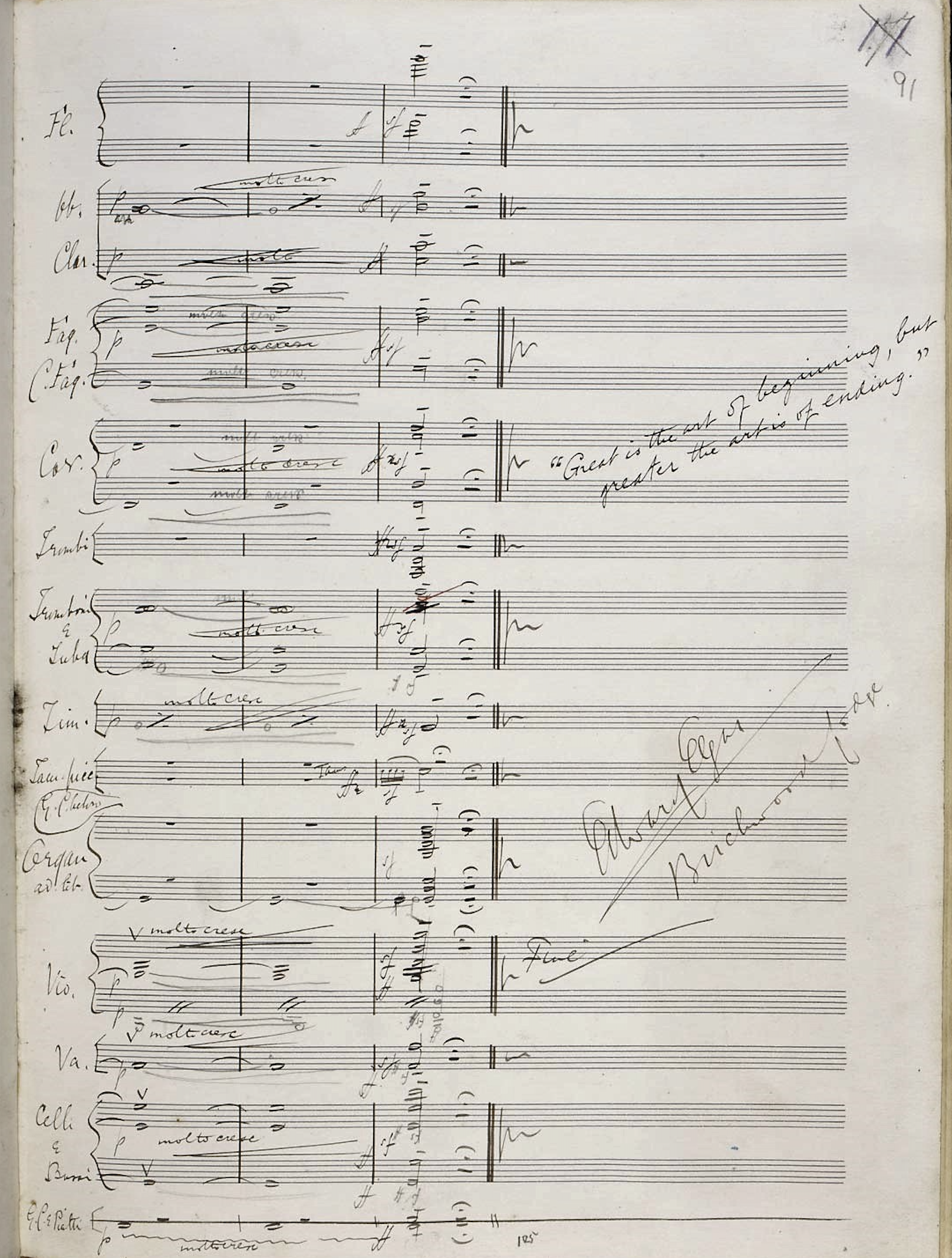
Shortly after the premiere of the Enigma Variations in June 1899, Elgar appended 96 measures to the Finale at the behest of his publishing agent August Jaeger and conductor Hans Richter. Only 21 days were required for Elgar to sketch and orchestrate that marvelous extension from June 30 through July 20, 1899. On the lower right-hand side of the final page on the Master Score, he added the following five words in an angular, inverted checkmark configuration:
Edward Elgar 
Birchwood Lodge 
Fine 
The composer’s autograph is accompanied by the name of a rented cottage near Malvern where he added the finishing touches to his symphonic masterpiece. There is a long confident line drawn beneath the signature pointing down and leftwards towards the Fine. A smaller line extending upwards to the right from the Fine completes the checkmark formation.

Autograph Score Variation XIV. (E. D. U.)

This inverted checkmark resembles an angular L, or more significantly, an inverted 7. The latter resemblance is discreetly reminiscent of Elgar's remark, “The drop of a seventh in the Theme (bars 3 and 4) should be observed.” An inverted 7 gives the appearance of a 7 that has fallen down. There are seven days in a week, so that particular numeral is associated with endings. The Italian term Fine also denotes an end. The premiere of the Enigma Variations heralded the end of Elgar’s relative obscurity as a provincial composer, ushering in an era characterized by substantial commissions and gigantic works.


The similarity of these two lines to a checkmark added by Elgar at the end of the extended Finale suggests one should check this particular area of the score. It is the culmination of a powerful orchestral peroration. The prominence of the ending over the beginning is bolstered by a fragment from stanza XIV of Longfellow’s Elegiac Verse cited at the top of the same page, “Great is the art of beginning, but greater the art is of ending.” It is remarkable the Roman numerals for that stanza are identical to those for the Finale. The Longfellow citation, checkmark arrangement of words, and the term Fine collectively imply that the key to unraveling Elgar’s enigma is to focus on endings rather than beginnings.
What could be so significant about how Elgar finished the extended Finale, a martial and triumphant self-portrait? Three features are markedly divergent from the original. There is a new ending, a new quotation, and a new location. Elgar composed the Enigma Variations at Forli, his residence in Malvern. He added the extension to the Finale at Birchwood Lodge. He quotes a paraphrase of a poetic fragment from Tasso’s La Gerusalemme liberata at the conclusion of the original Finale. It is a paraphrase because although the literary source remains apparent, he altered some of the words from the third to the first person. For the extended movement, he cites an unaltered fragment by one of his favorite poets, Longfellow. The Finale’s ending is altered, but the accompanying quotation remains intact.
On closer inspection, it was determined that the first letters from the first words of each line entry (Edward Elgar, Birchwood Lodge, and Fine) encode the initials for Ein feste Burg. These same three letters appear twice as “FEb” on the original cover page, and a third time as “FEb” on the last page of the original Finale. Multiple lines of evidence verify that Martin Luther’s famous hymn A Mighty Fortress is the covert Theme of the Enigma Variations. This particular cipher is an acrostic anagram, a series of first letters from first words that may be reshuffled to unveil the decryption. The name of this cryptogram is the Appended Finale Acrostic Anagram “EFB” Cipher. It ranks as just one out of over seventy different cryptograms dispersed throughout the Enigma Variations.

Appended Finale with “E F B” Acrostic Anagram Cipher

The “EFB” acrostic anagram on the concluding page of the extended Finale is not a fluke as Elgar deploys the same method of encipherment on the last page of the original ending. On the final page of the manuscript score with the original ending of Variation XIV, Elgar penned “Fine”, a paraphrase drawn from Torquato Tasso’s La Gerusalemma Liberata (Jerusalem Delivered) beginning with the word “Bramo”, and his autograph “Edward Elgar”. The first letters of these three entries form the acrostic anagram “EFB”, the initials of the covert Theme. The anomalous date on that page — “FEb 18 1898” — furnishes yet another anagram of “EFB” that accompanies the anniversary of Luther’s death on February 18, 1546.


There are two other acrostic anagram ciphers in the Enigma Variations that share striking similarities with these “EFB” ciphers on the last pages of the original and extended Finales. The first is the Letter Cluster Cipher which is comprised of the first letters in the titles of Variation XII (B. G. N.) and Variation XIV (E. D. U. and Finale). The titles of those two movements immediately before and after Variation XIII are an acrostic anagram for the initials of Ein feste Burg. Those three letters are the solution to the cryptic title (✡ ✡ ✡) of the intervening movement, Variation XIII.


Elgar literally framed his baffling asterisks with the answer, accounting for his numerous reorderings of the Variations to construct that particular cipher. In his book Elgar: Enigma Variations, musicologist Julian Rushton does an admirable job of documenting five divergent lists of the Variations, yet fails to detect or decode Elgar's rather elementary cryptogram. In detailing these varying compilations, Rushton missed the forest for the trees. Another remarkable example is ensconced within the opening four movements where proximate title letters form an acrostic anagram of “PIE CHRISTI ABIDE” (Pious Christ Abide). The Latin word for “Christ” (Christi) appears in the title of Elgar’s first sacred oratorio, Lux Christi, composed in 1896.


One key feature is that Elgar incorporates his full name or initials within these acrostic anagram ciphers. This is part of a larger pattern involving a variety of other cryptograms in the Variations. While it is possible to casually dismiss one acrostic anagram as a fluke, it is unreasonable to gloss over two or more that encipher the same solution. A third acrostic anagram formed by the Performance Directions in the Enigma Theme's opening bar is another extraordinary example of Elgar's affinity for this method of encipherment. Like the other acrostic anagram ciphers, its decryption includes the composer's initials (EE). That makes three different acrostic anagrams in the Enigma Variations that harbor Elgar's initials and complete name. It stands to reason that Elgar inserted his name or initials within these cryptograms to serve as a stealth form of authentication.
It is long overdue for career academics like Julian Rushton to wake up and smell the scores of ciphers lurking in the Enigma Variations. Elgar was an expert in the field of cryptography, and these ciphers bear his cryptographic fingerprints. To learn more about the riveting secrets of Elgar's breakout orchestral work, check out my free eBook Elgar’s Enigmas ExposedPlease help support and expand my original research by becoming a sponsor on Patreon.


Sunday, October 1, 2017

Elgar's Dual Initials Enigma Cipher

Whenever I had the opportunity of hearing Joachim play, I always felt as though he were a priest, thrilling his congregation with a sermon revealing the noblest moral beauties of a theme which could not help but interest all humanity. 

There are three names openly referenced in connection with the Enigma Variations that invite being categorized as a distinct subset because they possess dual initials. As the composer, Edward Elgar takes precedence as the first in this discrete group with the double initials E. E. The second is specifically mentioned by Elgar in the original 1899 program note, the poet and playwright Maurice Maeterlinck with the matching initials M. M. The third appears at the conclusion of the original Finale where Elgar paraphrases the renowned Italian Renaissance poet Torquato Tasso whose initials are T. T. In all, there are three names with dual initials overtly identified in association with the Enigma Variations: The composer Edward Elgar, the playwright Maurice Maeterlinck, and the poet Torquato Tasso. 
A fourth name with matching initials is covertly implicated by a music cipher in Variation XIII. This relatively simple cryptogram is constructed from the putatively extraneous Mendelssohn fragments drawn from his concert overture Meeresstille und glückliche Fahrt (Calm Sea and Prosperous Voyage). These fragments are framed in the contrasting keys of A flat major, F minor, and E flat major. The key letters “F-A-E are a noteworthy music cryptogram sourced from the initials of the German romantic motto, “Frei aber einsam.” The translation of that phrase is, “Free but lonely.” It was popularized by the renowned nineteenth century violinist Joseph Joachim, a protégé of Mendelssohn who conducted his London debut with the Royal Philharmonic Society during May 1844 in a performance of Beethoven’s Violin Concerto. From that time until his death in 1907, Joachim remained a favorite of British audiences. It is exquisitely appropriate and fitting that Elgar would encode Joachim’s motto using his mentor’s music. This FAE Mendelssohn Cipher reveals the fourth and final set of double initials (J. J.) for Joseph Joachim.
It is extraordinary that Joachim’s initials precisely match those of an alias adopted by Martin Luther when he was forced into hiding at Wartburg Castle. To conceal his identity, Luther exchanged his austere priestly attire for that of a wealthy noble, assuming the name Junker Jörg (Knight George). Luther composed Ein feste Burg, the battle hymn of the Reformation. There is mounting cryptographic and contrapuntal evidence that this heroic hymn is the covert Theme of the Enigma Variations. While masquerading as Knight George, Luther was ensconced within the confines of a literal mighty fortress. It is intriguing that at the time Elgar suddenly began work feverishly on the Enigma Variations in October 1898, he was seriously planning a major symphonic work in honor of General Gordon whose middle name happens to be George. Joachim’s dual initials clearly serve as double clues concerning both the identity of the covert Theme’s composer and its title. Mendelssohn was baptized a Lutheran on March 21, 1816, and remained a staunch adherent for the remainder of his life. Like his mentor, Joachim was also a Lutheran. Elgar’s open references to Mendelssohn and coded allusion to Joachim in Variation XIII provide compelling and multilayered references to Luther. That would explain why Elgar initially identified this movement with a solitary capital “L”, and only added years after the fact the letters ML, the initials for Martin Luther.
It has been shown that in connection with the Enigma Variations, Elgar makes overt references to three names with dual initials (Himself, Maeterlinck, and Tasso) and one coded reference to a fourth (Joachim) in Variation XIII. The letters for these dual initials (E. E., M. M., T. T., J. J.) do not appear to encipher any discernable plaintext message. Delving a layer deeper, the national heritages of these individuals were next considered as summarized in the table below:


There is an extraordinary acrostic anagram hiding in plain sight among the initials of the nationalities of these famed personages. Five of the six initials from this particular set of nationalities precisely match those of the covert Theme’s German title: Ein Feste Burg Ist Unser Gott. The absent U is stealthily provided by the German description of Joachim’s Jewish heritage because the German word for Jew (Jude) is pronounced “U-dah.” Phonetic spellings are a hallmark of Elgar’s unconventional writing style, something born out by his personal correspondence and the decryptions of numerous cryptograms in the Enigma Variations. For the subtitle of his rousing Finale, Elgar relied on the German rendering of his name (Eduard) for his unusual initials (E. D. U.) to phonetically reproduce the pet name “Edoo” given to him by his wife. The presence of a phonetic plaintext in the decryption of the Dual Initials Enigma Cipher bears Elgar’s cryptographic fingerprint. It is particularly significant because it relies on translating an English word into German, something also called for with the decryption of his Nimrod Wordplay Cipher.


Through a subset of initials distinguished by matching pairs of letters, Elgar brilliantly encodes another set of initials for the covert Theme’s title using the first letters of the attendant national and ethnic identities. This is a cleverly concealed acrostic anagram cipher. His use of four names in the Dual Initials Enigma Cipher to encode six solution letters presents a revealing numeric convergence because the title of the covert Theme originates from Psalm 46, a chapter made up of the integers 4 and 6. To learn more about the secrets behind one of Elgar’s most celebrated symphonic achievements, read my free eBook Elgar’s Enigmas ExposedPlease help support and expand my original research by becoming a sponsor on Patreon.


Monday, June 10, 2013

Elgar's Turin Shroud "Enigma" Ciphers

The Turin Shroud is a cipher because it conceals a picture within another.
Robert W. Padgett

A comprehensive analysis of the Enigma Variations conducted over nine years unmasked a cornucopia of ciphers. While seemingly extraordinary, these discoveries are entirely consistent with a reigning feature of Elgar’s psychological profile – an intense fascination for ciphers. More importantly, their decryptions are significant because they provide the answers to key questions concerning the Variations. What is the secret melody on which the Enigma Theme is a counterpoint? The decrypted answers consistently point to Ein feste Burg (A Mighty Fortress) by Martin Luther. What is the dark sayingassociated with the Enigma Theme? The surprising answer is a Music Box Cipher embedded in the opening six measures of the Enigma Theme. Who is the secret friend and inspiration behind Variation XIII? The answers from multiple ciphers point to Jesus Christ, the Lord and Savior of Elgar’s Roman Catholic faith. Amazingly, a subset of these Enigma Variations ciphers refers to the Turin Shroud and its first official photographer, Secondo Pia.


The Enigma Theme contains several music ciphers. One of the most basic among them is the Locks Cipher. In measure 6, there is an oddly placed double bar marking the end of something other than the Enigma Theme which concludes in bar 19. In these opening six measures, only the members of the string quartet play: Violin I, Violin II, Viola, and Cello. Adding up the notes for each of these active parts produces number totals that are easily matched to corresponding letters in the alphabet. Based on an elementary number-to-letter key (1 = A, 2 = B, 3 = C, etc.), the note totals produce LOQX. This is the phonetic equivalent of locks, a term suggesting the presence of multiple keys, and by extension, ciphers. Applying the formula in reverse (Z = 1, Y = 2, X = 3, etc.), the same note totals produce the letters LOJC. In the Bible, the term Lo means to look, gaze, or behold. JC are the initials for Jesus Christ. Together LOJC may be read as “Behold Jesus Christ.” By combining the plaintext results of the cipher going forwards (LOQX) and backward (LOJC) in the alphabet, a third solution emerges: LOOX LQ JC. This phrase (or ‘dark saying’) reads as “Looks like JC,” or “Looks like Jesus Christ.” This solution is an apt description of the miraculous image on the Turin Shroud first revealed by Secondo Pia’s famous photographic negative in May 1898.

In Variation II there is an oddly placed hyphen between the S and P in the initials H. D. S-P. The problem is Hew David Stewart Powell’s university records confirm he did not use a hyphen in his name. The reason behind Elgar’s decision to insert a hyphen where one clearly does not belong is to intimate the S-P stand for a very different name: Secondo Pia, the first official photographer of the Turin Shroud in 1898. The Roman numerals for this movement (II) affirm the first name as Secondo is Italian for second. The toccata-like runs that distinguish this movement represent Powell’s warm-up routine on the piano. Observe that the first three letters of that instrument (piano) are Pia, the second name. It should also be mentioned the word toccata is Italian meaning “to touch.” The reference to Secondo Pia is important because the Turin Shroud is later mentioned in the Romanza Cipher found in Variation XIII.

 
The Romanza Cipher 
In Variation XIII, Elgar quotes a fragment from a concert overture by Mendelssohn three times. These three fragments are identified within the score by quotation marks. The original German title of Mendelssohn’s overture is Meeresstille und glückliche Fahrt. The English translation of that title is Calm Sea and Prosperous Voyage. The Mendelssohn fragments sonically portray the deathly stillness of a calm sea, a phenomenon that imperils sailing ships. With four sounding notes per quotation, the total adds up to twelve notes for all three quotations. The original language, the number of quotations, and the number of notes in quotations present some intriguing parallels with the unstated principal Theme’s common three-word title in German consisting of twelve letters.
It was deduced these parallels were not arbitrary but formed the basis for an elimination cipher. Called the Romanza Cipher, its operation requires eliminating letters from the title Ein feste Burg that match note letters from the Mendelssohn quotations. This results in removing six letters with six left behind. The remaining letters (INSTUR) are an anagram for TURIN S. The word starting with S is literally shrouded due to an unspecified number of missing letters. However, knowing the first word (Turin) makes the task of unmasking the missing letters straightforward, revealing the word SHROUD. The Mendelssohn fragments further provide a clue regarding this shrouded term because sailing ships have a particular feature in their rigging known as a shroud.

Standing rigging called shrouds.

 
The Turin Shroud 

The FACE Cipher 
Elgar sonically portrays the sea in Variation XIII by means of four Mendelssohn fragments from the concert overture Calm Sea and Prosperous Voyage. The word sea is the phonetic equivalent of the letter C, the third letter in the FACE Cipher. The remaining letters are provided by the Mendelssohn fragments which are in the keys of A-flat major, F minor, and E-flat major. It is hardly a coincidence those key letters form the well-known music cryptogram F-A-E, hinting at the fact they contain yet another music cryptogram. Adding the letter C to the letters FAE generates an anagram of FACE. Whose face inspired Variation XIII? The one miraculously revealed by Secondo Pia’s famous photographic negative of the Turin Shroud. This mysterious friend’s initials are encoded by the Roman numerals XIII. X represents the number ten, and the tenth letter in the alphabet is J. III stands for three, and the third letter is C. Together the Roman numerals openly conceal the initials ”JC”.

A photographic negative of the Turin Shroud
 
 
The L Cipher 
Elgar originally designated Variation XIII with a solitary capital L. Many scholars have debated the significance behind that letter. With the discovery of various coded references to the Turin Shroud, the meaning becomes clear. The Turin Shroud has distinctive “poker hole” burn patterns in the shape of a capital letter L. That feature is the only discernible letter on the Turin Shroud. When inverted, the capital letter Lresembles the upper case of the Greek letter gamma. During the Byzantine era, the gamma was used to decorate alter clothes known as gammadia. The L-shaped poker holes on the Turin Shroud may have been deliberately put there to designate the cloth as sacred.

L-shaped “poker hole” pattern on the Turin Shroud
 
At the end of the original score, Elgar paraphrases a passage from Torquato Tasso’s epic Christina poem Jerusalem Delivered. There are various anomalies associated with this paraphrase since the source quote is altered, the date provide (1595) is incorrect, and the translation is inaccurate. Through anomalies Elgar signals the presence of a cipher, inviting careful scrutiny to arrive at a decryption. In this case, Tasso is the key because he was the guest of honor when the Shroud was first delivered to the city of Turin in 1578. The title of Tasso’s poem is a further clue, for Jesus was crucified and entombed in the outskirts of Jerusalem, his body wrapped in the very shroud Elgar acknowledges only in secret. It should be observed Elgar placed the name Tasso in brackets, a needless addition unless he was hinting at the very shape of the sacred cloth Tasso revered and wept before as he celebrated communion. The brackets around the name Tasso cleverly suggest the rectangular configuration of the Turin Shroud. Tasso composed a sonnet commemorating the 1578 ostension of the Turin Shroud, praising Christ's execution of mortality with the phrase, “[it is] in this marvelous blood where death has died.

Conclusion
This brief review documents multiple coded references to the Turin Shroud in the Enigma Variations. The first is the Locks Cipher in the opening six measures of the Enigma Theme. When decoded, it produces the phrases Behold Jesus Christ, and Looks like Jesus Christ. Both are fitting descriptions of the Turin Shroud. The Hyphen Cipher in Variation II encodes the name of Secondo Pia, the first official photographer of the Turin Shroud. The timing of Pia’s famous photograph in May 1898 is credible because it predates the genesis of the Enigma Variations by five months. In Variation XIII, the Romanza Cipher names the Turin Shroud as TURIN S, leaving the word shroud symbolically shrouded by its five absent letters.
The Mendelssohn quotations in Variation XIII help realize this decryption because Goethes original poem describes a sailing ship stranded on a calm sea, and those vessels possess a particular type of rigging known as a shroud. The importance of that sacred relic to Roman Catholics like Elgar is highlighted by the FACE Cipher, for Pia’s famous photographic negative of the Turin Shroud vividly revealed for the first time the face and crucified body of a man many believe to be Jesus. Elgar originally designated Variation XIII with a single capital letter L, and that is the only discernible English letter on the Turin Shroud formed by distinctive poker hole patterns. Finally, the Tasso Cipher serves as a distinct literary reminder of Elgar’s interest in the Turin Shroud because Tasso was the guest of honor when it was delivered to the city of Turin in 1578. Tasso was so moved by the experience that he composed a sonnet to commemorate this special exhibition of the Turin Shroud. With so many ciphers pinpointing the same famous religious relic, there is no room for doubt. The literary and cryptographic evidence affirms that the Turin Shroud served as a major source of inspiration behind the Enigma Variations. To learn more about the secrets of the Enigma Variations, read my eBook Elgar’s Enigmas Exposed. Please help support and expand my original research by becoming a sponsor on Patreon.


About Mr. Padgett

My photo
Mr. Padgett studied violin with Michael Rosenker (a student of Leopold Auer), and Rosenker’s pupil, Owen Dunsford. Mr. Padgett studied piano with Sally Magee (a student of Emanuel Bay), and Blanca Uribe (a student of Rosina Lhévinne). He attended the Stevenson School in Pebble Beach, California, and Vassar College in Poughkeepsie, New York, where he graduated Phi Beta Kappa with a degree in psychology. At Vassar he studied music theory and composition with Richard Wilson. Mr. Padgett has performed for Joseph Silverstein, Van Cliburn, Arnold Schwarzenegger, Maria Shriver, Steve Jobs, Prince Charles, Lady Camilla, Marcia Davenport, William F. Buckley, Jr., and other prominent public figures. His original compositions have been performed by the Monterey Symphony, at the Bohemian Grove, the Bohemian Club, and other private and public venues. In 2008 Mr. Padgett won the Max Bragado-Darman Fanfare Competition with his entry "Fanfare for the Eagles." It was premiered by the Monterey Symphony under Maestro Bragado in May 2008. A member of the Elgar Society, Mr. Padgett is married with five children.