The English composer Edward Elgar dedicated Variation VII from the Enigma Variations to his friend Arthur Troyte Griffith (1864–1942), a member of an architectural firm based in Malvern. It is likely that Elgar first met Griffith in 1897. Educated at Harrow and Oriel College, Oxford, he settled in Malvern in the 1890s, where he designed the Worcestershire Beacon Toposcope, All Saints Church in Malvern Wells, the Wyche Institute, and a number of local houses. An accomplished watercolorist and designer as well as a skilled chess player, he helped Elgar found the Malvern Concert Club in 1903 and served for decades as its first secretary and treasurer. Though Elgar’s whirlwind musical portrait lovingly caricatures his friend’s clumsy pianism, Griffith was held in lasting esteem in Malvern, where a blue plaque now commemorates both his architectural work and his long friendship with the composer. Griffith’s piano playing was famously rugged, more a matter of exuberant pounding than refined technique, and Elgar transformed that boisterous clumsiness into musical caricature in Variation VII. In one oft‑cited anecdote, Elgar heightened Troyte’s natural tendency to hammer at the keyboard by attaching numbered tapes to specific piano keys and inviting his friend to strike them “hard and fast” in sequence. Troyte dutifully banged out the numbered keys, producing a jagged, noisy pattern that delighted the composer. Troyte left the following written account of that episode: One Sunday when I went into the study at Craeglea [sic; a residence named ‘Craeg Lea’ where Elgar resided between March 1899 and July 1904], the piano was open and stuck on the notes bits of stamp edge with numbers written on them. ‘What’s this for?’, I asked. ‘That’s for you,’ said Elgar. ‘Learn the numbers by heart and observe carefully that some of the notes have more than one number. When you can remember them hit the notes in order with one finger hard and fast.’ After a few shots I got it right. ‘That’s it’, said Elgar, ‘Hit ‘em harder and keep your finger stiff.’ I said, ‘I believe it’s a tune. What is it?’ Elgar laughed and said, ‘Oh nothing, we only wanted to hear what it sounded like when you played it.’ That tune must have been the theme.
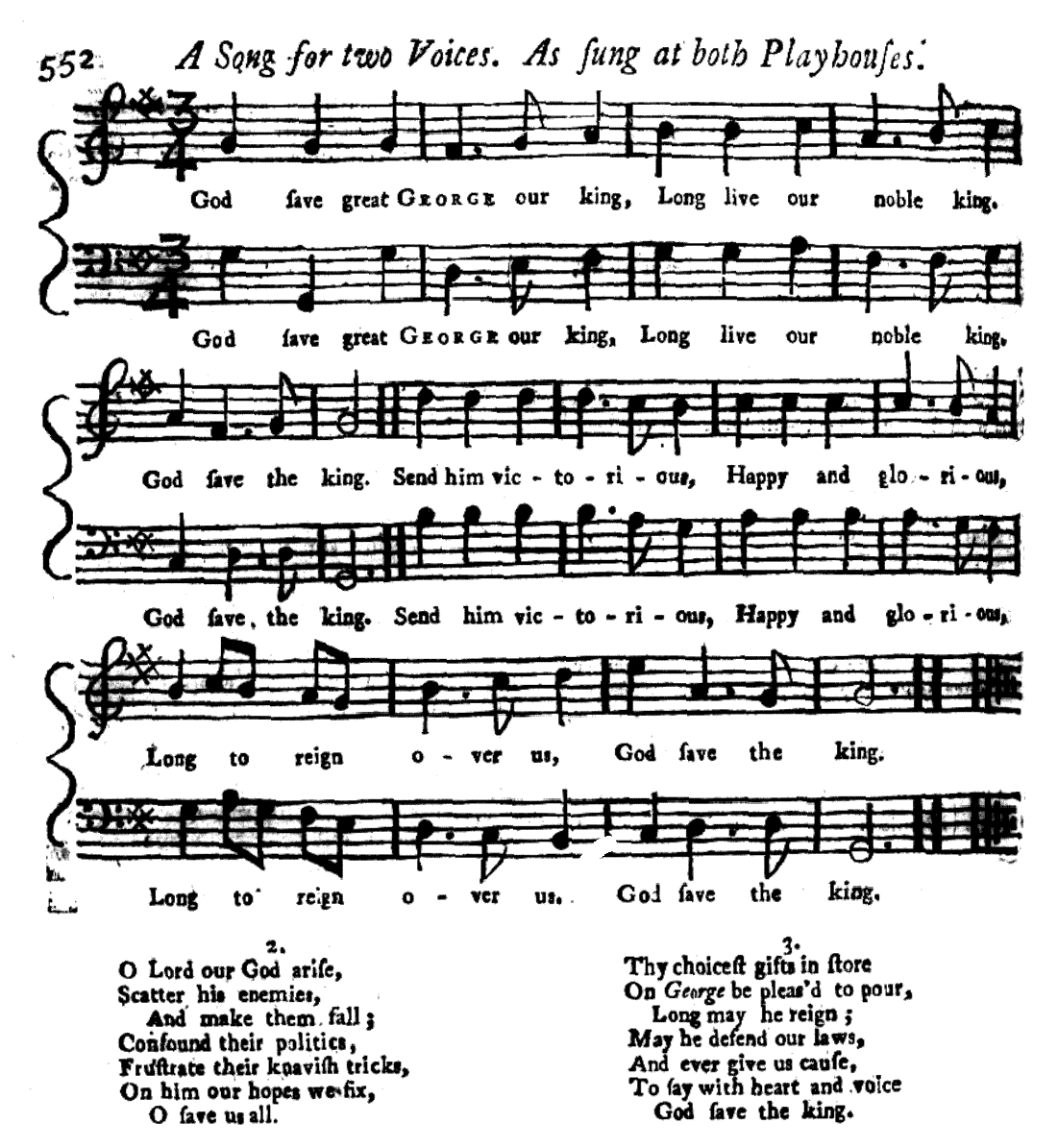
Elgar commissioned Troyte to draft the letterhead and motto layout for the Worcestershire Philharmonic Society soon after it was founded in late 1897. Elgar chose the chorus “Wach auf” from Richard Wagner’s opera Die Meistersinger von Nürnberg as the signature song and motto of the Society. The lyrics feature the opening seven lines of Hans Sachs’ 700-line poem Die Wittenbergisch Nachtigall (The Wittenberg Nightingale), published in July 1523. In that poetic defense of the Reformation, the German reformer Martin Luther is likened to a blissful nightingale whose song rings out over hills and valleys at dawn. Griffith’s letterhead reflects this allegorical imagery by depicting a sunrise scene with a nightingale singing over the hills and valleys. The bird is perched above the letter “E” on the Society’s banner, an initial Elgar used to sign his personal correspondence.
Elgar conducted the inaugural concert of the Worcestershire Philharmonic Society on May 7, 1898, featuring the cantata Die Wallfahrt nach Kevlaar by Engelbert Humperdinck alongside “Wach auf,” as confirmed by a glowing review in the June 1898 issue of The Musical Times. 167 days later, Elgar began composing the Enigma Variations on October 21, 1898. He conducted a second society program on January 7, 1899 — 78 days into sketching the short score, which he orchestrated between February 5 and 19, 1899. A third concert followed on May 4, 1899 — 46 days before the premiere of the Enigma Variations in London under Hans Richter, who shares his first name with Hans Sachs. Luther clearly weighed on Elgar’s mind in the months before, during, and after he composed the Enigma Variations. His choice of a Wagnerian chorus in honor of Luther as the signature song for the Worcestershire Philharmonic Society resonates with the discovery of Luther’s hymn Ein feste Burg as the hidden melody to the Enigma Variations. Although no source explicitly identifies Griffith’s religious affiliation, the available evidence points toward Anglicanism. He was educated at Harrow and Oriel College, Oxford, both institutions with strong Anglican traditions. His architectural practice was closely tied to Anglican worship. He designed All Saints Church in Malvern Wells and created an altar frontal and superfrontal for the Anglican Church of St. Andrews in Pau, France. Most tellingly, his funeral was held at All Saints Church — the Anglican church he himself had designed — before his burial at Malvern Wells Municipal Cemetery. These details strongly suggest that Griffith, like Elgar’s friend August Jaeger, was a Protestant. That Elgar entrusted an apparently Anglican friend with the design of a letterhead bearing a Lutheran motto is consistent with his lifelong ecumenical engagement with Protestant sacred music.
Richard Powell, the husband of Dora who is depicted in Variation X, published a paper titled Elgar’s Enigma in 1934 shortly after Elgar’s death. In his essay, Powell proposed the folk tune Auld Lang Syne as the hidden melody of the Enigma Variations. In it, Powell alludes to the fact that most of Elgar’s friends portrayed in the Variations were Anglicans, not Roman Catholics: It is worth while to note that the persons portrayed and commemorated in this fashion were not celebrities ; they were friends, close friends, and in one case more than that. Another reflection suggests itself ; it is almost impossible to believe that Elgar, when thinking out the scheme of this peculiar, if not unique, work, would select for his unheard melody a tune drawn from the classics or the church, for it must be remembered that most of the friends commemorated were only amateur musicians and one was not even musical. Furthermore, most of them were not of his religion.
Many friends depicted in the Enigma Variations belonged to the social circle of Elgar’s wife. Alice was born into a prominent Anglican family — the daughter of a decorated Major General and great-granddaughter of Robert Raikes, founder of the Anglican Sunday School movement. Though she agreed to a Catholic wedding ceremony at the Brompton Oratory in 1889, she did not formally convert to Roman Catholicism until July 1893. Her Anglican upbringing shaped the social circle she brought to her marriage, which accounts in large part for why most of the friends portrayed in the Enigma Variations were Protestant rather than Catholic — precisely the observation Powell makes in his 1934 paper. In his original 1899 program note, Elgar specified that the absent principal Theme must play “through and over” the set of Variations. In compliance with that condition, the following short score of Variation VII includes a third staff showing how plays as a counterpoint above the movement. The absent melody does not appear in the introductory four measures (210–213), three transitional bars (223–225), and a pause between phrases (253). Based on this contrapuntal mapping, the hymn plays over 64 measures of the 72 bar movement for nearly 89% coverage.
The phrase structure of Ein feste Burg unfolds across Variation VII in the sequence ABABCDEFB ABCDE[1]AB[1] for sixteen phrases in all. The first sequence (ABABCDEFB) preserves the complete phrase order of the hymn without reordering, compression, or omission, demonstrating that Elgar retained the hymn’s architecture fully intact for the opening round. Only in the second sequence (ABCDE[1]AB[1]) does Elgar vary the phrase structure by omitting Phrase F and restricting the final statements of Phrases E and B to their incipit first notes. As with each variation, Elgar subtly varies the hymn’s phrase structure from movement to movement, a strategy that serves to confuse and camouflage the hidden counterpoint from casual detection.
The phrases of Ein feste Burg mapped over Variation VII come from three contrasting versions of the hymn to form a tribrid melody. This pattern is likewise observed in the contrapuntal mappings of the chorale with the Enigma Theme, Variations I, II, III, IV, V, and VI. Phrases A and B reflect Bach’s rendering in the final chorale (“Das Wort sie sollen lassen stahn”) from his Cantata BWV 80. Phrases C and F are based on Bach’s version and Mendelssohn's distinct adaptation from the Finale of the Reformation Symphony, whose melodic contour aligns with Bach’s. Phrase D follows the pattern of Luther’s original version, which Bach faithfully preserved in his rendering, and which Mendelssohn likewise retained. Phrase E reflects Mendelssohn’s version exclusively. Ecclesiastes 4:12 declares that a threefold cord is not easily broken — and so it is with this tribrid theme, woven from the distinct but harmonious contributions of Luther, Bach, and Mendelssohn. Consult the following exhibit to easily compare phrases from all three versions of Ein feste Burg.
The following short score tracks the contrapuntal course of Ein feste Burg through and over Variation VII by cataloguing two categories of note matches between the hymn and the movement. A melodic conjunction is defined as any matching note between the melody of Ein feste Burg and the melody line of the variation. A harmonic conjunction is defined as a match between a melody note from the covert principal Theme and any non-melodic note sounding simultaneously in the variation. Both melodic and harmonic conjunctions require the matching notes to sound together to qualify as a match. In the annotated short score, a melodic conjunction is represented by a diamond-shaped note head, and a harmonic conjunction by a triangle-shaped note head. The total number of melodic conjunctions, harmonic conjunctions, and their combined sum serve as objective measures of the efficacy of this contrapuntal solution. A robust counterpoint will distribute these matches broadly across the movement rather than clustering them in isolated passages, and the mapping of Ein feste Burg through and over Variation VII achieves precisely that objective.
The contrapuntal devices of augmentation, diminution, similar motion (SM), and contrary motion (CM) are also observed in the annotated score. For the purposes of this analysis, similar motion encompasses any instances of parallel motion, and contrary motion any instances of oblique motion. In some cases, the upper voice of the variation moves in parallel with Ein feste Burg while the bass line moves in a contrary manner. An effective counterpoint typically employs a fairly balanced mix of contrary and similar motion, something clearly evident throughout this mapping.
The following table identifies 73 melodic conjunctions between Ein feste Burg and Variation VII dispersed across 35 bars, covering 49% of the movement’s 72 measures. When excluding 8 bars in which the hymn was deemed dormant, that coverage increases to 55% of 64 active measures. In most bars where melodic conjunctions are absent, harmonic conjunctions maintain the contrapuntal connection. The 73 melodic conjunctions encompass six note types with frequencies ranging between 2 and 25. Note G leads with 25 matches (34%), followed by note C with 20 (27%), note A with 15 (21%), note A-flat with 8 (11%), note B with 2 (3%), and note F with 3 (4%). Together, the three most frequent notes — G, C, and A — account for nearly four-fifths (82%) of all melodic conjunctions.
The next table identifies 159 harmonic conjunctions between Ein feste Burg and Variation VII dispersed across 61 bars, covering 85% of the movement’s 72 measures. When 8 dormant measures are excluded, harmonic conjunctions span 61 of 64 active bars, raising the coverage to 95%. The 159 harmonic conjunctions encompass eight note types with frequencies ranging between 3 and 75. Note G leads with 75 matches (47%), followed by note C with 50 (31%), note A-flat with 14 (9%), note A with 5 (3%), note F with 5 (3%), note E with 4 (3%), note B with 3 (2%), and note D with 3 (2%). Together, the two most frequent notes — G and C — account for nearly four-fifths (78%) of all harmonic conjunctions, reflecting the dominant and tonic of C major, the home key of Variation VII.
There is a combined total of 232 note conjunctions (73 melodic + 159 harmonic) across the active bars of Variation VII, covering 64 of 72 measures for an 89% coverage rate. When 8 dormant measures are excluded, the combined conjunctions span all 64 active bars for a 100% coverage rate. Of those 64 active bars, 32 feature both melodic and harmonic conjunctions simultaneously, representing 50% of active measures. These figures demonstrate that Ein feste Burg engages the full harmonic texture of Variation VII rather than merely skimming its surface melody.
The test Elgar set is straightforward but demanding: the covert principal theme must play above each movement of the Enigma Variations as a counterpoint. Nowhere does he specify that any particular mapping must achieve 100% coverage of a movement. More than a century of purported solutions have failed to meet Elgar’s requirement, for none has ever been successfully mapped contrapuntally above any complete movement. Ein feste Burg has met that test across every movement without exception, replicating sequential note content phrase by phrase while preserving the hymn’s phrase architecture from the Enigma Theme to the Finale. Ein feste Burg stands in a class all its own because it accomplishes what no other attempted solution can: it plays “through and over” the set as a counterpoint.